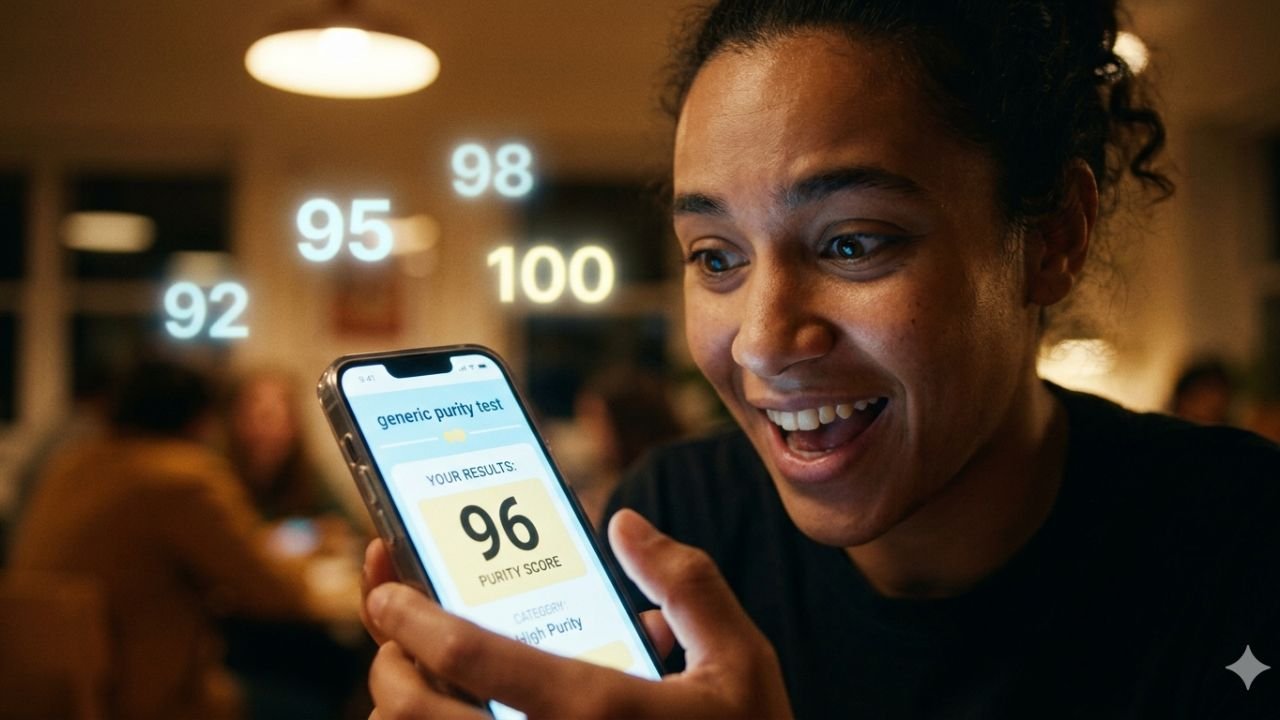
So you just took the Rice Purity Test, and your score came back somewhere between 90 and 100. Maybe you’re sitting there blinking at the screen, wondering if you did something wrong. Or maybe your friends are teasing you, calling you “innocent” or “pure” like it’s some kind of joke.
Here’s the thing: a score of 90 to 100 on the Rice Purity Test is real, it’s valid, and it’s actually more common than people think. But there’s a lot of confusion around what it means, whether it’s something to be proud of, or whether it says anything meaningful about who you are as a person.
In this post, we’re going to break it all down. What does a Rice Purity Test score of 90–100 actually mean? Who typically gets this score? Is it even possible in today’s world? And most importantly, should you care?
Let’s get into it.
What Is the Rice Purity Test, Anyway?
Before we dive into the scores, let’s quickly cover the basics for anyone new here.
The Rice Purity Test is a self-graded survey that originated at Rice University in Houston, Texas. It was created as a fun way for college freshmen to bond and compare life experiences with each other. The test has 100 questions that ask about various experiences and things related to relationships, substances, academic honesty, legal situations, and more.
Here’s how the scoring works:
- You start with a score of 100
- Every “yes” answer (meaning you’ve done that thing) subtracts one point
- The final number is your purity score
So the higher your score, the fewer of those experiences you’ve had. A score of 100 means you answered “no” to every single question. A score of 0 (nearly impossible) would mean you’ve done everything on the list.
The test isn’t scientific. It doesn’t measure your worth, your intelligence, your kindness, or your future. It’s just a snapshot of certain life experiences, nothing more.
What Does a Score of 90–100 Mean?
If your score falls between 90 and 100, it means you’ve had very few or possibly none of the experiences listed on the test. This typically includes things like:
- No history with alcohol, smoking, or substances
- No sexual or romantic experiences (or very limited ones)
- No run-ins with the law
- No cheating in school or academic dishonesty
- Living a relatively sheltered or intentional lifestyle
People in this range are often younger (think high school or early college), come from conservative or religious backgrounds, or simply haven’t been in situations where these experiences naturally came up.
But here’s something important: a high score doesn’t automatically make someone boring, sheltered, or immature. It just means their life has looked a certain way so far. And that’s perfectly okay.
Is a Score of 90–100 Really Possible?
Absolutely, yes. It’s not just possible, it’s actually quite common among certain groups of people.
Let’s think about it logically. If someone is:
- A teenager who has just started high school or college
- Someone raised in a strict religious household
- A person who simply prefers to avoid risky behavior
- Someone who grew up in a small, sheltered community
- A person who has been focused on academics, sports, or other goals
…then scoring between 90 and 100 makes complete sense. There’s nothing fake or impossible about it.
The test was originally designed for Rice University freshmen, remember? Many of these students were 17 or 18 years old, coming straight from high school. A score in the 90s for someone that age is not surprising at all.
In fact, when the test first became popular on college campuses, a higher score was seen as a baseline, something you started with before college life introduced you to new experiences. The test was meant to be lighthearted, not a competition to see who could score the lowest.
Who Usually Scores 90–100 on the Rice Purity Test?
Here are some real-life examples of the kinds of people who often land in this score range:
The High School Student, a 16-year-old who just discovered the test through TikTok or a friend. They haven’t been to parties yet, haven’t dated seriously, and their biggest “wild” moment was staying up past midnight. Totally valid.
The College Freshman in the First Week. They just got to university, haven’t had time to experience anything yet, and took the test during orientation week as an icebreaker. Their score reflects their life before college, nothing more.
The Intentional Abstainer: Someone who has consciously chosen not to drink, smoke, or engage in certain behaviors because of personal values, religion, health, or just plain preference. They’re not missing out; they’re living by their own standards.
The Late Bloomer: Some people simply experience certain milestones later in life than others. That’s completely normal and nothing to be embarrassed about.
The Quiet Observer: Someone who is introverted, prefers small social circles, and hasn’t been in situations where the test’s scenarios would naturally occur.
What a High Score Doesn’t Mean
Let’s clear up some common misconceptions, because people can be really unfair about this.
A score of 90–100 does NOT mean:
- You’re lying (some people actually assume this)
- You’re boring or have no personality
- You’re immature or inexperienced in all areas of life
- You’ll always have a high score (life changes)
- You’re judging people with lower scores
- Something is wrong with you
Life experience isn’t measured by a 100-question checklist. Someone could score 95 on this test and still be incredibly wise, emotionally intelligent, well-traveled, and deeply compassionate. And someone could score 30 and still be going through major personal struggles.
The number doesn’t define you. Please remember that.
The Social Pressure Around Rice Purity Test Scores
Here’s something nobody talks about enough: the weird pressure that comes with this test.
Some friend groups treat a low score like a badge of honor. They laugh at high scores, call it “cringe,” or act like being “pure” is something to be ashamed of. That’s honestly not okay.
On the flip side, some people feel ashamed of a low score, like they’ve made too many mistakes or lived too recklessly.
Both reactions miss the point.
The Rice Purity Test was never meant to rank people or determine their worth. It was a fun, informal way to start conversations between strangers at college. That’s it. When it becomes a tool for judgment, in either direction, it stops being fun and starts being harmful.
If you scored 90–100 and someone made you feel weird about it, here’s a gentle reminder: you don’t owe anyone an explanation for how you’ve lived your life.
Practical Tips: How to Handle Reactions to Your Score
Whether you’re proud of your high score, confused by it, or getting teased about it, here are some practical tips for navigating the whole thing:
- Don’t fake your answers to seem “cooler.” This is more common than you’d think. People answer dishonestly because they’re embarrassed by a high score. But the test is for you, not for anyone else. Faking it defeats the whole purpose.
- Use it as a conversation starter, not a judgment tool. The test works best when it opens up lighthearted conversations. “Oh, you’ve never done that? What about this?” It’s supposed to be fun and connecting, not competitive.
- Remember that scores change over time. If you take the test again in two or three years, your score might look very different. Life moves forward. That’s natural. A high score today doesn’t lock you into anything.
- Don’t let it affect your self-esteem. Your score is not your identity. Whether it’s 95 or 45, it’s a number on a quiz — not a reflection of your intelligence, your future, or your value as a human being.
- Respect other people’s scores too. Just as you don’t want to be judged for a high score, don’t judge others for lower ones. Everyone has their own path.
Is There Any Benefit to Having a High Purity Score?
Okay, let’s be real for a second. Are there actual benefits to living a life that results in a high Rice Purity Test score?
Honestly? Sometimes, yes.
- Fewer regrets: Many people who avoided certain risky behaviors in their youth say they’re glad they did
- Better health outcomes: Avoiding substances and certain risky behaviors does have real health benefits
- Stronger sense of self: People who live by intentional values often report feeling more grounded
- More options later: Some choices made early in life can limit options later. Not always, but sometimes
But here’s the balance: life is also about experience, growth, and learning, even from mistakes. A very high score isn’t automatically “better.” It just reflects a different path.
There’s no perfect score. There’s only your score and your story behind it.
Frequently Asked Questions
Is a score of 100 on the Rice Purity Test actually possible?
Yes, it’s possible though rare. A score of 100 means you answered “no” to every single one of the 100 questions. This might apply to very young teenagers or people who have lived in extremely sheltered environments. It’s real, but uncommon for adults.
Should I be embarrassed if I score between 90 and 100?
Absolutely not. Your score reflects your personal experiences, and there is no shame in having lived a certain kind of life. High scores are just as valid as any other. Don’t let anyone make you feel bad about yours.
Does a high Rice Purity Test score mean I’m immature?
No. Maturity has nothing to do with whether you’ve tried alcohol or had certain experiences. Emotional intelligence, empathy, responsibility, and self-awareness are signs of maturity, not a low purity score.
Can adults score in the 90–100 range?
Yes, they can. Adults who don’t drink, don’t smoke, have had limited romantic relationships, and avoid risky behaviors can absolutely score in this range. It depends entirely on lifestyle and personal choices.
Is the Rice Purity Test accurate or scientifically valid?
No, it’s not a scientific assessment. It’s a fun, informal quiz that was created for college students to compare experiences. It has no clinical or psychological validity. Take it lightly and don’t over-read into the results.
Conclusion
If you walked away from the Rice Purity Test with a score between 90 and 100, you’ve got nothing to apologize for and nothing to prove. Your score is a small, incomplete snapshot of a few specific experiences, and it says absolutely nothing about who you are as a person, where you’re headed, or what you’re capable of.
The internet can make it feel like everyone is out there living wild, adventurous lives while you’re sitting quietly at home. But that’s not reality. Reality is messy, diverse, and full of people at every point on the spectrum. Some people have experienced a lot, some haven’t, and most fall somewhere in the complicated middle.
What matters more than any quiz score is how you treat people, how you handle challenges, what you value, and how you grow over time.
So if your score is 95? Own it. If it’s 72? Own that too. You are more than a number on a purity test, and the sooner you believe that, the more freely you’ll move through life.
Now go share this post with a friend who needs to hear it. And maybe just maybe take the test again in a few years and see how your story has changed.