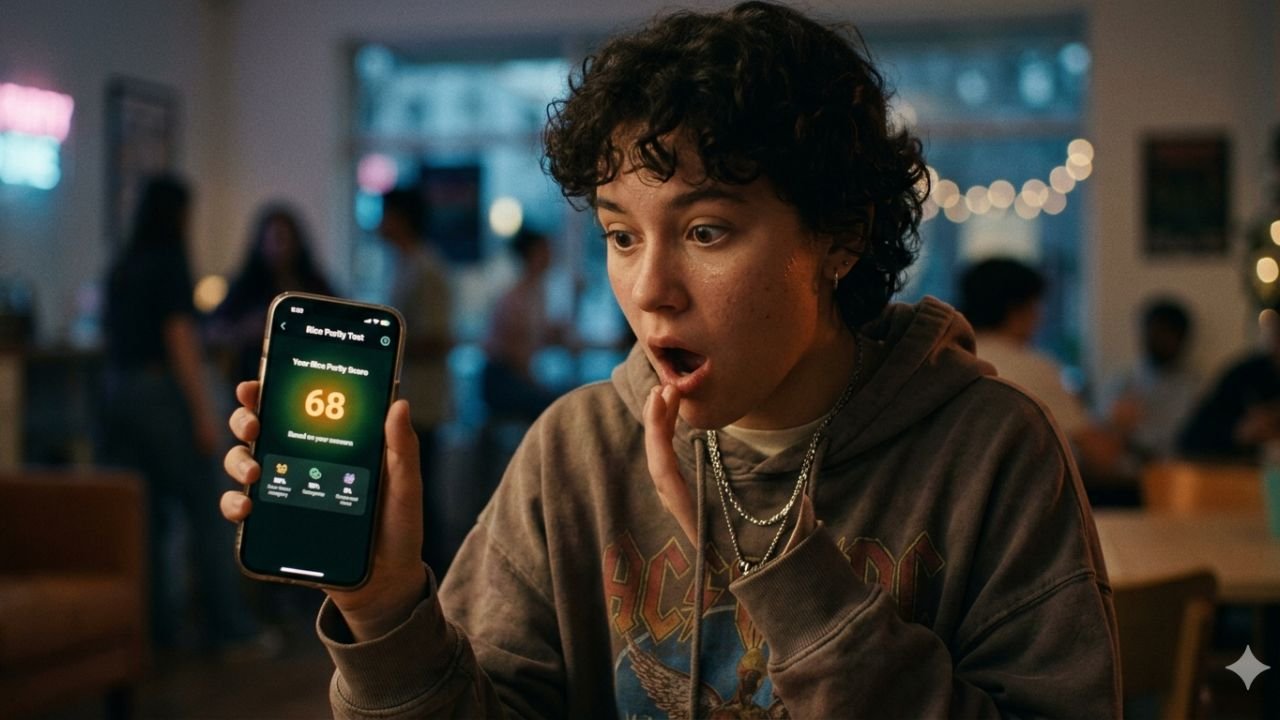
So you just took the Rice Purity Test and got your score. Maybe your friends dared you to do it at a sleepover. Maybe you found it on TikTok. Or maybe you’re just curious because everyone seems to be talking about it.
And now you’re staring at your number, wondering if this is normal? Am I too innocent? Too experienced? What does this even mean?
First of all, take a breath. You’re not being judged. The Rice Purity Test is not a report card. It’s not a test you pass or fail. And your score doesn’t define who you are as a person.
But since you’re here, let’s talk about it honestly, openly, and without any judgment. Because teens deserve real answers, not vague, overly cautious ones that make you feel more confused than before.
Let’s break it all down.
What Is the Rice Purity Test, Exactly?
The Rice Purity Test originally started at Rice University in Houston, Texas. It was created as a way for college students to “bond” and learn about each other’s life experiences in a fun, casual way. The test is basically a checklist of 100 questions about various life experiences, things like relationships, social situations, and personal choices.
Each question is something you check off if you’ve done it. At the end, your score is calculated out of 100. The higher your score, the more “pure” or inexperienced you are (in the test’s language). The lower your score, the more experiences you’ve had.
That’s it. It’s really that simple.
It was never meant to be a moral judgment. It was a fun icebreaker for college students. But over time, it spread to high schools, and now it’s everywhere: on Reddit, TikTok, group chats, and teen forums all over the internet.
How Does the Scoring Work?
Here’s a quick breakdown of what different score ranges generally mean:
Score 100: You haven’t done anything on the list. Completely new to most life experiences.
Score 90–99: You’ve had very few experiences. Maybe held hands, had a small crush, or stayed out past curfew once.
Score 70–89: You’re somewhere in the middle-lower range of teen experiences. Maybe you’ve dated someone, had your first kiss, or gone to a party.
Score 50–69: You’ve had quite a few experiences. More social, maybe more adventurous.
Score below 50: You’ve experienced a lot, according to the test’s standards.
But here’s the thing: these numbers are just numbers. They don’t tell the full story of who you are.
What’s a Normal Score for Teens?
This is the big question, right? And the honest answer is, it depends.
Your score at age 13 will be very different from your score at age 17. That’s completely natural. Life experiences come with time, and everyone moves at their own pace.
Here’s a rough idea of what many teens score, based on general community discussions and online forums (not an official study):
Ages 13–14: Most teens in this age group score somewhere between 85 and 98. At this age, most people haven’t had a lot of social or romantic experiences yet, and that’s completely okay and normal.
Ages 15–16: Scores tend to start ranging more widely, with 70 to 90 being common. Some teens have started dating, going to parties, or making more independent choices.
Ages 17–18: The range gets even wider here. Scores anywhere from 45 to 85 are pretty common, depending on individual experiences, social circle, and lifestyle.
But here’s something really important to understand:
There is no universally “normal” score. A 15-year-old with a score of 95 is not behind. A 16-year-old with a score of 60 is not ahead in some better way. Life isn’t a competition, and the Rice Purity Test should never make you feel like it is.
Why Teens Are So Obsessed With Their Scores
Let’s be real, part of the reason the Rice Purity Test is so popular among teens is that it feels like a way to compare yourself to your friends. And comparison is very human, especially during teenage years when you’re figuring out who you are.
Teens often take the test because:
- They’re curious about how they compare to their friend group
- It’s a social activity, taking it together at sleepovers or in group chats
- It starts interesting (and sometimes awkward) conversations
- It feels like a fun way to learn about experiences without pressure
- Social media makes it trendy
All of that is understandable. But it’s worth keeping in mind that the test can sometimes make you feel like you need to have certain experiences to fit in, and that’s where it can become a little tricky.
The Pressure to Score “Low” (And Why You Should Ignore It)
Here’s something no one really talks about openly: some teens actually feel pressure to have a lower score. Like it’s cooler or more mature to have done more things.
That’s a problem.
Think about why you would want to rush through experiences just to get a lower number on a quiz you found online? Real life doesn’t work like a checklist. Your experiences should happen because they feel right for you, not because a score made you feel behind.
If your friends are comparing scores and making you feel bad for having a high number, that says more about the pressure in that social situation than it does about you.
A high score means you’re making choices that feel right for your age and values. That’s something to feel good about, not embarrassed about.
What Your Score Actually Tells You (And What It Doesn’t)
Let’s clear something up: your Rice Purity Test score tells you very little about your character, values, or worth as a person.
What it doesn’t tell you:
- Whether you’re a good friend
- Whether you’re kind, smart, or creative
- Whether you have strong morals
- Whether you’re mature or responsible
- Whether you’re going to live a fulfilling life
What it might loosely reflect:
- The kinds of social situations you’ve been in
- Your level of exposure to certain environments
- Some general life experiences up to this point
That’s all. It’s a snapshot of a checklist, not a personality assessment, not a maturity test, and definitely not a measure of your worth.
Real Talk: A Story From a Real Teen Perspective
Imagine you’re 16 and you just took the test with your friend group. Your score is 82. Your best friend’s score is 61. Suddenly, you feel weirdly embarrassed, like you’ve been “too sheltered” or “too boring.”
But then you think about it. Your friend has been to more parties. You chose not to because you’re focused on your passion for music. You’ve spent weekends practicing guitar, recording covers, building something real for yourself.
Who’s living a better teenage experience? Nobody. You’re both just living different ones.
That’s the truth about the Rice Purity Test. It can only count what’s on its list. It can’t count your ambitions, your passions, your kindness, or your growth.
Should Teens Even Be Taking the Rice Purity Test?
This is a fair question. The test was originally made for college students, and some of the questions on it are definitely meant for older audiences.
If you’re a younger teen (13–14), some of the questions might be confusing or feel completely irrelevant to your life, and honestly, that’s fine. You don’t have to have answers for everything on the list.
If you do take it, here are some healthy ways to approach it:
- Take it for fun, not for validation. It’s a quiz, not a verdict on your life.
- Don’t compare aggressively. Your score is your own story.
- Know that skipping questions is okay. You don’t owe anyone your personal information.
- Talk to someone you trust if any questions bring up confusing feelings. A parent, school counselor, or trusted adult can help.
Practical Tips: How to Handle the Score Conversation With Friends
Since this test often comes up in group settings, here are some tips for navigating those conversations without feeling awkward or pressured:
- Keep it light. If your friend group is taking it together, treat it as entertainment, not a ranking system.
- You don’t have to share your score. Seriously. If you don’t want to, just say “I’d rather keep mine private” and change the subject.
- Don’t tease others about their scores. Whether someone scores high or low, it’s their personal experience. Teasing can seriously hurt feelings.
- If someone scores low and seems proud in a “look how wild I am” way, that’s okay too, just don’t feel like you need to compete.
- If someone seems upset by their score, check on them. Some questions on the test touch on sensitive topics, and a friend’s reaction might be more complicated than it looks.
Frequently Asked Questions
Is a high score good or bad?
Neither. A high score just means you’ve checked off fewer things on the list. It doesn’t make you better or worse than anyone else. In fact, many adults look back and appreciate the times they took things slowly.
My score is really low for my age. Should I be worried?
Not necessarily from a quiz perspective. But if you feel like some of your experiences happened because of pressure from others or situations that didn’t feel right, that’s worth talking about with a trusted adult. Your well-being matters more than any score.
Can my score go down over time?
Yes, as you have more experience in life, your score will naturally go down. This is expected. Everyone’s score changes as they grow up.
What’s the average Rice Purity Test score for high schoolers?
Based on general online discussions and community sharing, many high schoolers score somewhere between 60 and 85, but there’s genuinely huge variation. There’s no official average, and the range is wide for a reason: everyone’s life is different.
Should I lie about my score to seem cooler?
Please don’t. Not because honesty is a rule, but because it puts you in a weird position of pretending to be someone you’re not. The people worth hanging out with won’t care what your score is. And if they do? That tells you something important about that friendship.
Conclusion
At the end of the day, the Rice Purity Test is just a fun internet quiz. It was never meant to be the ultimate measure of a teen’s life experience or maturity. A score of 95 doesn’t mean you’re boring. A score of 55 doesn’t mean you’ve lived more. It just means you’ve made different choices, and that’s okay.
What matters more than any number is how you feel about your own choices. Are you making decisions that align with your values? Are you respecting yourself and others? Are you growing into the person you want to be?
Those questions matter a lot more than a purity score ever will.
So go ahead, take the quiz with your friends, laugh about it, talk about it,t and then put the phone down and go live your actual life. That’s where the real story is.