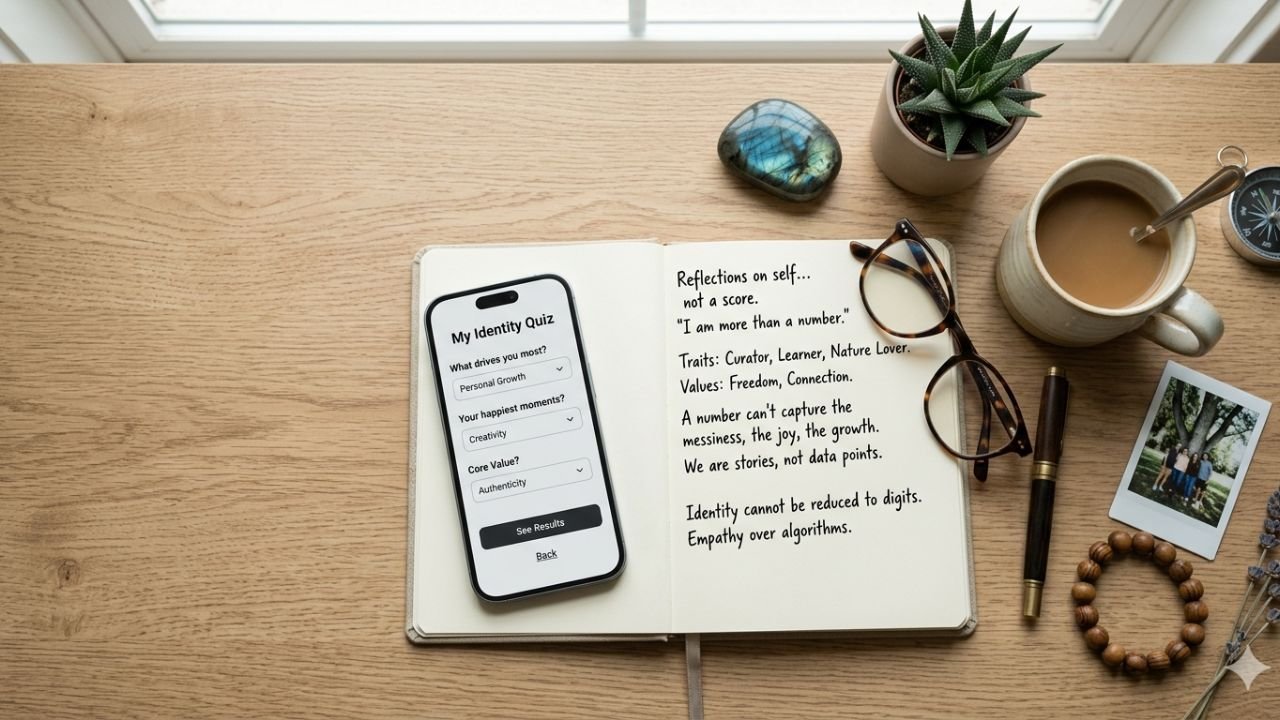
Let me ask you something. Have you ever seen someone’s Rice Purity Score and immediately formed an opinion about them? Maybe you thought, “Wow, they’re so innocent” or “Whoa, they’ve been through a lot.” If you have, you’re not alone. Millions of people take this quiz every year, share their scores online, and then face judgment from others based on a simple three-digit number.
But here’s the truth nobody talks about enough: that number means absolutely nothing about who someone truly is as a person.
The Rice Purity Test has been around since the 1920s, created at Rice University as a fun way for students to bond. It’s a 100-question checklist covering topics like relationships, substances, and life experiences. The lower your score, the more “experienced” you’re considered. The higher your score, the more “pure” you’re seen.
Sounds harmless, right? Well, it can be. But the moment people start using that score to judge, shame, or rank others, that’s when things go wrong.
In this post, we’re going to talk about why judging someone based on their Rice Purity Score is unfair, misleading, and honestly, just not cool. Whether your score is 98 or 28, you deserve to be seen as a full human being, not a number.
What Is the Rice Purity Score, Really?
Before we dive into why judgment is harmful, let’s get clear on what this test actually is and what it is not.
The Rice Purity Test is a self-graded survey with 100 questions. You check off experiences you’ve had, and your final score ranges from 0 to 100. A score of 100 means you haven’t checked anything. A score closer to 0 means you’ve checked off most items.
What the test covers:
- Romantic and physical relationships
- Alcohol and substance use
- Rule-breaking or rebellious behavior
- Academic experiences
- Social and legal situations
Now here’s the key thing: this test was never designed to be a moral report card. It was created for fun, for college students to laugh and connect over. It was never meant to tell you whether someone is a good or bad person.
But somewhere along the way, people started treating it like it does exactly that.
Why Judging Someone by Their Score Is Deeply Unfair
1. A Number Can Never Capture a Person’s Story
Think about your own life for a second. Can everything you’ve ever been through, your struggles, your growth, your mistakes, your victories, fit into a single number? Of course not.
People have complicated lives. Someone might have a low Rice Purity Score because they grew up in a difficult environment where certain experiences were unavoidable. Someone else might have a high score simply because they grew up in a very sheltered or conservative household, not because they’re morally superior.
The score reflects what someone has experienced, not who they are.
There’s a big difference between those two things.
2. Experiences Don’t Equal Character
Here’s a real-life scenario. Imagine two people:
Person A has a score of 45. They’ve been through a rough patch, experimented with substances, had a complicated relationship history, and made some choices they’re not proud of. But today, they’re one of the most empathetic, honest, and supportive friends you could ever have. They’ve learned from everything they went through.
Person B has a score of 90. They’ve lived a sheltered life, never really faced many temptations. But they’re judgmental, cold, and quick to look down on others.
Who is the better person? Neither score tells you that. Character is built through values, kindness, empathy, and how you treat people, not through what boxes you’ve checked on a quiz.
3. The Test Has Cultural and Social Bias
This is something a lot of people don’t think about. The Rice Purity Test was created in an American college context. Many of the questions are heavily influenced by Western cultural norms.
Someone from a different cultural background might have a naturally high score, not because of personal values, but because those experiences simply aren’t part of their culture or environment. Judging them as “innocent” or “sheltered” based on that completely ignores the context of their life.
On the flip side, someone might score lower because of cultural factors that have nothing to do with personal choice. Judging them as “wild” or “impure” is unfair and disrespectful.
4. It Can Seriously Hurt People’s Mental Health
When people share their scores and face ridicule or judgment, it can have real emotional consequences. Imagine being made to feel ashamed of the past things you may have already grown from or made peace with.
Or imagine being mocked for having a high score and being called “boring” or “inexperienced” as if living a quieter life is something to be embarrassed about.
Both ends of the spectrum come with unnecessary pressure:
- Low scorers are often judged as irresponsible, reckless, or “too much.”
- High scorers are often mocked as boring, naive, or out of touch
Neither is fair. And neither helps anyone feel good about themselves.
5. People Change Scores Don’t Show Growth
One of the biggest problems with judging someone by their score is that it freezes them in time. That score represents a snapshot, maybe of who they were at 18, or 20, or last year. It doesn’t show who they are today.
People grow. People heal. People change direction, find new values, and become completely different versions of themselves. A number from a fun quiz doesn’t and shouldn’t follow someone like a permanent label.
The Dangerous Side of Score-Based Judgment
Shaming People for Their Past
When someone is shamed for having a low score, it sends a toxic message: that their past experiences make them less worthy of respect or love. This kind of thinking can contribute to real emotional harm.
People who already struggle with shame around their past don’t need a quiz score rubbed in their face. They need understanding, not judgment.
Putting People on a Pedestal for Being “Pure”
On the other hand, when people are praised and glorified for having a high score, it creates an unrealistic and often unhealthy ideal. It suggests that inexperience is inherently virtuous, which puts unnecessary pressure on young people to avoid normal human experiences out of fear of being judged.
Using It to Manipulate Others
Sadly, some people use Rice Purity Scores in unhealthy ways in relationships. For example, pressuring a partner to “lower their score” with them, or feeling entitled to know someone’s score as a condition of friendship or dating. This crosses a serious boundary.
Your experiences are yours. You don’t owe anyone a number or an explanation.
Practical Tips: How to Engage with the Rice Purity Test in a Healthy Way
If you’re going to take the test or you’re around others who are here are some ways to keep it fun and harmless:
Keep it light. The test is meant to be a fun, social activity. Treat it that way. Laugh about it, talk about funny stories, but leave it there.
Don’t share your score unless you’re comfortable. You are never obligated to share your score with anyone. It’s personal information, and you get to decide who sees it.
Avoid comparing scores. Comparison is the quickest way to turn something fun into something harmful. Your score isn’t a competition.
Don’t let it define your identity. You are so much more than any quiz result. Whether you score 15 or 95, that number has zero bearing on your worth as a human being.
Check in with yourself. If taking the test brings up uncomfortable feelings, shame, anxiety, or sadness, it’s okay to step back. You don’t have to participate in something that doesn’t feel right to you.
Speak up when others are being judged. If you see someone being mocked or shamed over their score, say something. A little kindness goes a long way.
What We Should Focus on Instead
Instead of judging people by a quiz score, here’s what actually matters when getting to know someone:
- How do they treat people? Are they kind, respectful, and considerate?
- Are they honest? Do they show up with integrity in their relationships?
- How do they handle difficult situations? Do they take responsibility, or do they blame others?
- Do they respect boundaries? Both their own and other people’s?
- Are they growing? Are they trying to be better, learn more, and improve?
These are the things that tell you about a person’s character. Not a checkbox quiz.
Real Talk: Everyone’s Path Looks Different
Life isn’t a straight line. Some people experience a lot at a young age. Others take a slower, more cautious path. Some people had choices made for them by their circumstances, their families, or situations beyond their control.
Judging anyone for where they fall on that spectrum is a sign of narrow thinking. It assumes that there’s one “right” way to live life, and there isn’t.
Your journey is yours. Their journey is theirs. And both deserve respect.
Frequently Asked Questions
Is the Rice Purity Score accurate or meaningful?
Not really, no. It’s a self-reported quiz based on experiences, not values, character, or emotional maturity. It can be a fun conversation starter, but it’s not an accurate measurement of anything significant about a person.
Should I be ashamed of my Rice Purity Score?
Absolutely not. Whether your score is high, low, or anywhere in between, there’s nothing to be ashamed of. Your experiences are part of your story, and your story has value.
Is it okay to ask someone their Rice Purity Score?
It depends on the context. In a casual, friendly setting where everyone is comfortable, it can be a fun conversation. But you should never pressure someone to share, and you should never use their answer to judge or mock them. If someone doesn’t want to share, respect that immediately.
Can a low Rice Purity Score mean someone is a bad person?
No. A low score simply means someone has had more of the experiences listed on the test. It says nothing about their kindness, integrity, empathy, or character. Some of the most wonderful, caring people you’ll ever meet might have low scores. Some of the most harmful people might have high ones.
What should I do if I’m being judged for my score?
First, remember that the judgment says more about the other person than it does about you. You don’t owe anyone an explanation. Set boundaries if needed, distance yourself from people who make you feel ashamed, and surround yourself with people who see you for who you truly are, not a number.
Conclusion
At the end of the day, the Rice Purity Score is just a quiz. It was made for fun, and fun is the only thing it should be used for.
When we start using it as a tool to judge, rank, or shame people, we stop seeing the actual human being in front of us. We reduce them to a number. And no person, no matter what they’ve been through, deserves to be reduced to a number.
So the next time you see someone’s score, take a breath. Remember that behind that number is a whole person with a whole story. A story filled with experiences, growth, mistakes, love, loss, and everything in between.
Choose curiosity over judgment. Choose kindness over criticism. Choose to see people for who they are, not what a 100-question quiz says about them.
Because honestly? The people who judge the least are usually the ones worth keeping around.